
National News
Obi Aguocha’s Public Outcry Pays Off as FG Suspends Proposed WAEC, NECO Exam Fee Hike


The Federal Government has suspended the proposed review of registration fees for the 2027 West African Senior School Certificate Examination (WASSCE) and the National Examinations Council (NECO) Senior School Certificate Examination (SSCE), following widespread public criticism and calls for a rethink. The Federal Ministry of Education, in a statement dated July 13, 2026, said the proposal had been placed on hold to allow for broader consultations with stakeholders before any final decision is reached.
Recall that Hon. Obi Aguocha, Member representing Ikwuano/Umuahia North and South Federal Constituency, was among the first federal lawmakers to publicly reject the proposed N50,000 uniform examination fee, describing the policy as insensitive and capable of worsening the hardship already confronting millions of Nigerian families. He urged the Federal Government to immediately review the proposal, insisting that education should remain affordable and accessible to every Nigerian child irrespective of their social or economic background.
Aguocha argued that the proposed fee failed to reflect the harsh economic realities in the country. According to him, “Many Nigerian families are living daily lives of hopelessness and insufficient opportunities. We need, as a matter of urgent national importance, to review this onerous policy thrust on our people and take cognisance of the difficult and underperforming social and economic challenges in the country.”
The lawmaker also questioned the logic behind fixing a uniform examination fee of N50,000 when Nigeria’s national minimum wage is N70,000. “How does that make sense?” he asked. “Even if one is earning N150,000 monthly, how can a family survive with all these fees and the rising cost of living? Parents are already battling inflation, transportation costs, rent, food prices and other school-related expenses.”
Hon. Aguocha further warned that introducing such a policy at a time of severe economic hardship would only increase the number of out-of-school children and place additional pressure on struggling households. He maintained that when citizens are pushed to the wall economically, the consequences often include rising insecurity, corruption, kidnapping and other social vices, urging the government to adopt policies that inspire hope rather than deepen despair.
Announcing the suspension, the Federal Ministry of Education said the letter conveying the proposed fee adjustment had been withdrawn to pave the way for comprehensive stakeholder consultations. The Ministry acknowledged the concerns raised by Nigerians and reiterated the Federal Government’s commitment to inclusive, transparent and evidence-based policymaking, while noting that the proposed review was initially informed by the rising cost of conducting credible national examinations.
The development has been widely welcomed by parents, education stakeholders and civil society groups, with many describing the Federal Government’s decision as a victory for constructive public engagement. Observers say the strong intervention by Hon. Obi Aguocha and other concerned Nigerians contributed significantly to the decision to suspend the proposed fee hike and reopen discussions on a more affordable and socially responsive approach.

Abia State Governor, His Excellency Dr. Alex Otti, OFR, on Monday, July 20, 2026, officially received Master Michael Offorkaile, the Abia-born student who scored 367 in the 2026 JAMB/UTME, making him the 5th highest scorer in the country.
The Governor received the brilliant student, his parents, and the management of Grundtvig International Secondary School, Oba, Anambra State, in his office.
The Governor congratulated Master Offorkaile on the outstanding feat and said the State Government does not take it for granted.
Governor Otti reaffirmed that his administration is founded on meritocracy and will continue to celebrate Abia indigenes who excel in all facets of society.
“We don’t take this for granted. We really appreciate your visit. The whole idea is to celebrate our own when they do well. And as a government founded on meritocracy, we will not stop celebrating people who do well.
“We also want him to be a source of encouragement to those coming after him. And to know that when they do well, they will be celebrated,” the Governor said.
Governor Otti vowed to support the young scholar’s academic pursuit and directed that the details of the support be worked out by the Commissioner for Tertiary Education.
He further directed the Senior Special Assistant on Public Communication, Mr. Dodoh Okafor, to liaise with the parents of the beneficiary for further directives.
Governor Otti urged Master Offorkaile to see the JAMB success as just the beginning and to aim higher in his University education.
“We also want this to be an encouragement to him because the journey has just started. JAMB is the little roadblock you have to go through to now start a degree programme of four years.
“So, having been celebrated because you came first, we expect that you even do better as you go to the University. And as a State, we will support you. I believe that the details of the support will be worked out by the Honourable Commissioner for Tertiary Education.
“But, I think what’s most important is for you to know that your State is behind you, recognises the feat that you have performed and encourages you to even do better,” Gov. Otti stated.
The Commissioner for Tertiary Education, Prof. Uche Eme Uche, while introducing the top scorer to the Governor, said the Governor had mandated her to fish out the boy and bring him to the State to be honoured.
She noted that it was not easy to reach him as the school strictly follows all regulations and restrictions, which she described as impressive. She congratulated the student and the management of the school that produced him.
The Principal of Grundtvig International Secondary School, Oba, Mr. Ige Bello, and the father of the lad, Mr. Odinaka Offorkaile from Umunneochi LGA, said they were not surprised at the feat achieved by Master Offorkaile, given his excellent academic antecedents.
They appreciated the Governor for the honour done to the lad and for his immense support to education as well as the good governance he has entrenched in Abia State, and prayed God to bless him.
In his response, the highly elated top JAMB scorer, Master Michael Offorkaile, thanked Governor Otti for the honour done to him, his family, and his school.
He described the Governor as his role model and assured that he would continue to perform and make Abia State and Nigeria proud.
“I want to thank you for what you have done for me and my family, and also my school today. And I will also try my best to keep performing, keep inspiring, keep encouraging students from Abia and Nigeria.”
The school principal later presented a yearbook of the school to the Governor.
Members of the State Executive Council were present at the visit.
Ctz. UKOHA, NJOKU UKOHA
Chief Press Secretary to the Executive Governor of Abia State.
National News
Unmasking the Economic Potential and Cultural Heritage of the Ukwa People Through the Visit of Her Excellency, Senator Oluremi Tinubu, to the Akwete Weaving Centre
Introduction
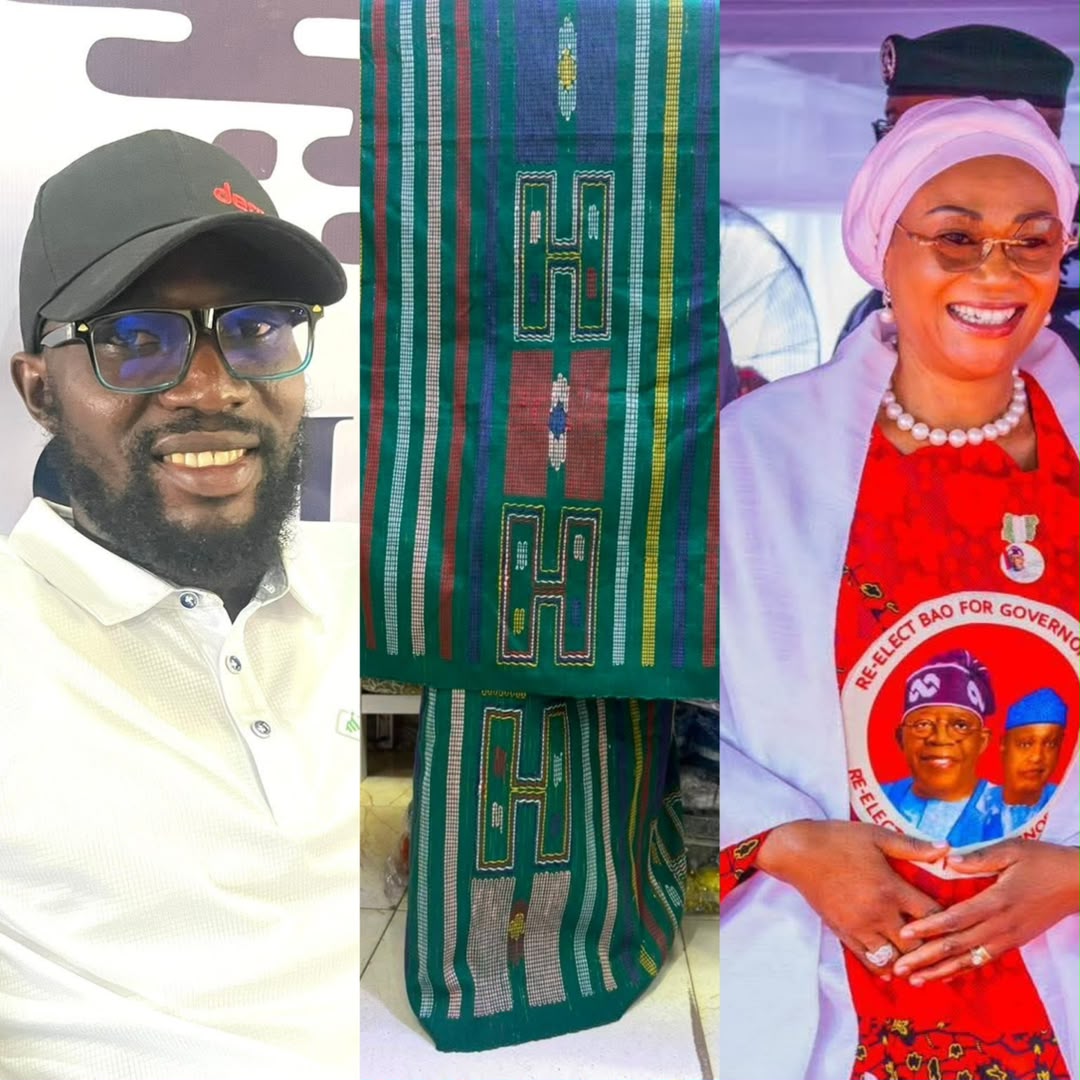
The scheduled visit of Nigeria’s First Lady, Her Excellency Senator Oluremi Tinubu, to the historic Akwete Weaving Centre in Ukwa East Local Government Area of Abia State on Tuesday, 21 July 2026, is more than a ceremonial engagement. It is a significant national recognition of one of Nigeria’s oldest surviving indigenous industries and an opportunity to showcase the rich cultural heritage, economic potential, and entrepreneurial ingenuity of the Ukwa people.
For decades, Akwete cloth has stood as a symbol of African craftsmanship, yet the story behind its origin, the resilience of its weavers, and its enormous contribution to Nigeria’s cultural economy have remained largely underreported. The First Lady’s visit therefore provides an opportunity not only to celebrate this remarkable heritage but also to stimulate renewed interest in preserving and commercialising one of Nigeria’s finest indigenous textile traditions.
The Ukwa People: A Historic Commercial and Cultural Crossroads
The Ukwa people trace their ancestry to the ancient Igbo migrations into the Niger Delta hinterland. Owing to their strategic location between the Igbo hinterland and the coastal communities of present-day Rivers State, they emerged as important intermediaries in regional commerce centuries before colonial rule. Their close interactions with neighbouring Ibani, Kalabari, Okrika, and Ijaw communities profoundly shaped their economy, culture, and social development. Today, the Ukwa people occupy the southern part of Abia State, comprising Ukwa East and Ukwa West Local Government Areas, traditionally known as Ndoki and Asa. They share boundaries with communities in Abia, Rivers, Akwa Ibom, and Imo States, making them one of the most strategically located ethnic groups in southeastern Nigeria.
This unique geographical position transformed Ukwa into a thriving commercial corridor where palm oil, palm kernels, fish, salt, agricultural produce, crafts, and textiles, including the world-renowned Akwete cloth, were exchanged long before colonial administration. These commercial interactions enriched the culture of the Ukwa people while preserving their distinct Igbo identity. Today, Ukwa remains both a cultural bridge and an economic gateway linking southeastern Nigeria with the Niger Delta, reflecting centuries of peaceful trade, cultural exchange, and entrepreneurial enterprise.
Akwete: The Cradle of Nigeria’s Finest Indigenous Textile
Among the communities that make up the Ndoki clan, Akwete occupies a unique place in Nigeria’s cultural history. Located in present-day Ukwa East Local Government Area of Abia State, Akwete has earned international recognition as the home of one of Africa’s oldest surviving indigenous weaving traditions. Indeed, the history of Akwete cannot be separated from the history of its famous weaving industry. Although various oral traditions explain the origin of the town’s name, there is broad agreement among historians that Akwete achieved prominence because of its exceptional textile industry. Over time, the town became so closely associated with its distinctive woven fabric that the cloth itself came to bear the name “Akwete.”
Situated close to the Imo River, Akwete historically served as an important commercial gateway connecting the Igbo hinterland with the Niger Delta. This strategic location enabled the community to flourish as a centre of commerce, attracting traders from neighbouring ethnic groups and facilitating the exchange of goods, skills, and artistic ideas. Although Akwete participated actively in the palm oil trade and other commercial activities, weaving remains its greatest cultural contribution. Historical evidence suggests that while weaving existed in several Igbo communities, it was the women of Akwete who transformed the craft into a highly sophisticated textile industry during the nineteenth century. By incorporating artistic influences acquired through trade with neighbouring Niger Delta communities, Akwete weavers developed distinctive patterns, vibrant colours, and intricate motifs that became highly sought after across West Africa.
The Origins and Evolution of Akwete Weaving
Akwete weaving is widely regarded as one of Nigeria’s oldest and most celebrated indigenous textile traditions. Originating from Akwete town in the Ndoki area of present-day Ukwa East Local Government Area, the craft has earned global recognition as one of Africa’s finest handwoven textile traditions and remains a powerful symbol of Igbo cultural identity. The precise origin of Akwete weaving predates written history and therefore remains uncertain. Nevertheless, oral traditions and historical scholarship agree that the craft has existed for several centuries. Some accounts trace weaving in Akwete to the pre-colonial era, while others attribute its remarkable transformation to a legendary woman, Dada Nwakwata, also known as Dada Nwakata. She is believed to have revolutionised the craft during the late nineteenth century by introducing wider looms, more elaborate designs, richer colour combinations, and intricate weaving techniques that distinguished Akwete cloth from other indigenous textiles. Regardless of these differing accounts, historical evidence confirms that Akwete weaving had already become a thriving industry by the mid-to-late nineteenth century and had established a reputation for excellence long before the twentieth century.
A Tradition Preserved by Women
Unlike many African weaving traditions that were dominated by men, Akwete weaving has historically been the exclusive preserve of women. Within the traditional division of labour in the Ukwa clan, women spun fibres, designed patterns, wove the fabrics, marketed finished products, and trained younger generations in the craft. Men, on the other hand, prepared and maintained the looms while sourcing raw materials required for production. This complementary arrangement ensured that the knowledge of weaving was carefully preserved and transmitted from mothers to daughters, making the craft not only an economic activity but also a vital instrument for safeguarding the community’s cultural identity. Initially, Akwete women produced textiles using raffia, sisal, hemp, and locally cultivated cotton. These materials were woven into wrappers, ceremonial cloths, towels, mats, robes, and bags for domestic use and trade. As commercial exchanges expanded across the Niger Delta, imported cotton yarns and brightly coloured threads became available, enabling weavers to create increasingly sophisticated designs that elevated Akwete cloth to international acclaim. The growing demand for the fabric attracted merchants from neighbouring Ijaw, Ibani, Kalabari, and Okrika communities, many of whom commissioned customised designs and established trading relationships with Akwete artisans. Some merchants even settled permanently in the town, further transforming Akwete into one of the foremost indigenous textile centres in West Africa.
Akwete Cloth: A Symbol of Prestige, Identity and Artistic Excellence
Beyond its commercial value, Akwete cloth occupies a unique place in the cultural life of the Igbo people. For generations, it has been worn during marriages, coronations, title-taking ceremonies, burials, festivals, and traditional religious rites, making it far more than an ordinary fabric. It is a symbol of honour, dignity, prosperity, leadership, and cultural identity. One of the defining characteristics of Akwete cloth is its intricate geometric motifs, vibrant colours, and richly textured patterns. Every design tells a story, reflecting values such as fertility, wealth, family, royalty, spirituality, and harmony with nature. Among the most celebrated traditional patterns is Ikaki (“Turtle”), a design believed to have evolved from motifs introduced through trade with neighbouring Niger Delta communities. Rather than merely copying foreign designs, Akwete weavers refined and transformed them into distinctly indigenous artistic expressions that became synonymous with the community’s identity. Today, more than fifty traditional Akwete patterns have been documented, each possessing its own historical and cultural significance. These patterns continue to distinguish Akwete cloth from other African textiles and underscore the remarkable creativity of its artisans.
Unlike the horizontal looms commonly used in many parts of West Africa, Akwete weavers employ a distinctive vertical loom that enables them to produce broad wrappers, double-faced fabrics, complex geometric motifs, and richly textured ceremonial cloths of exceptional quality. When imported cotton, silk, and rayon became available during the colonial era, Akwete women embraced these materials without abandoning their traditional techniques. Instead, they integrated modern yarns into their weaving, creating brighter colours and more elaborate patterns while preserving the authenticity of their indigenous craftsmanship. This ability to innovate without sacrificing tradition remains one of the enduring strengths of Akwete weaving.
Akwete and the Palm Oil Economy
Although weaving brought Akwete international recognition, the community also played a significant role in the nineteenth-century palm oil economy that linked the Niger Delta with European merchants.
Its strategic location along the Imo River made Akwete an important trading post where agricultural produce, palm oil, palm kernels, fish, salt, and textiles were exchanged. Traders from the Igbo hinterland and coastal communities converged in Akwete, contributing to its emergence as one of the region’s leading commercial centres. Historical records also indicate that Akwete was among the coastal transit points associated with the transatlantic slave trade during the nineteenth century. Among the notable historical figures connected to this period was Jaja, who later rose to prominence as the renowned King Jaja of Opobo. Historical accounts suggest that he passed through Akwete as a youth before eventually becoming one of the most influential rulers and merchants in the Niger Delta. These historical connections further highlight Akwete’s significance in the economic and political history of southeastern Nigeria.
International Recognition of Akwete Weaving
Despite the decline of Nigeria’s textile industry in the late twentieth century, Akwete weaving survived through the resilience of local women, family enterprises, and weaving cooperatives that continued to preserve the craft. In recent years, the industry has witnessed renewed interest, driven by the global demand for handmade textiles, sustainable fashion, and indigenous African designs. Today, Nigerian fashion designers increasingly incorporate Akwete fabric into jackets, gowns, handbags, footwear, accessories, and luxury fashion collections. The fabric has become a favourite among designers seeking to combine contemporary fashion with traditional African aesthetics. Beyond the fashion industry, Akwete cloth has attracted the attention of museums, universities, historians, and cultural institutions around the world.
Prestigious institutions, including the British Museum in London and the Metropolitan Museum of Art in New York, preserve Akwete textiles in their collections, recognising their exceptional artistic, historical, and cultural significance. This international recognition demonstrates that Akwete cloth is not merely a local fabric but a globally respected cultural treasure.
Government Efforts to Preserve Akwete Weaving
Recognising the cultural and economic importance of Akwete weaving, successive colonial, regional, state, and federal governments have introduced various initiatives aimed at preserving, modernising, and commercialising the industry. Although these interventions have yielded positive results, many stakeholders believe they have not been sufficiently sustained to unlock the industry’s full economic potential.
Colonial Administration (Late Nineteenth Century–1960)
During the colonial period, British administrators recognised the commercial value of Akwete cloth and introduced measures to improve production and expand its market.
Among the notable interventions were:
* The establishment of handloom weaving workshops in Akwete.
* The introduction of improved looms and weaving equipment.
* The importation of machine-spun cotton yarn to complement locally spun fibres.
* Technical training programmes facilitated by British textile experts.
These initiatives significantly improved the quality, durability, and colour variety of Akwete fabrics, making them more competitive within regional markets.
Eastern Nigeria and East Central State Governments (1960s–1970s)
Following Nigeria’s independence, the governments of Eastern Nigeria and later East Central State promoted indigenous crafts through cottage industry programmes designed to stimulate local economic development.
Their interventions included:
* Artisan training schemes.
* Support for weaving cooperative societies.
* Cultural festivals showcasing Akwete cloth.
* Promotion of indigenous textile production.
However, the Nigerian Civil War (1967–1970) severely disrupted production, destroyed markets, and interrupted commercial activities, slowing the growth of the weaving industry for several years.
Imo State Government (1976–1991)
Before the creation of Abia State in 1991, Akwete was part of the old Imo State. During this period, the state government promoted Akwete weaving through cultural exhibitions, vocational education programmes, and initiatives aimed at preserving indigenous textile production. These efforts contributed to keeping the tradition alive during a period when Nigeria’s textile industry was experiencing significant challenges.
Abia State Government (1991 to Date)
Since the creation of Abia State, successive administrations have consistently recognised Akwete weaving as one of the state’s most valuable cultural and economic assets. Government initiatives have included:
* Sponsorship of annual cultural festivals featuring Akwete cloth.
* Promotion of Akwete weaving at trade fairs and exhibitions.
* Support for women-owned weaving cooperatives.
* Skills acquisition and artisan development programmes.
* Marketing Akwete as a tourism and cultural heritage product.
* Encouraging greater participation in Nigeria’s creative economy.
In recent years, there has also been renewed emphasis on positioning Akwete cloth as a major component of Abia State’s cultural branding strategy and creative economy
Federal Government Support
At the national level, the Federal Government has supported Akwete weaving through agencies such as the former Nigerian Crafts Council, the National Council for Arts and Culture, now under the Federal Ministry of Art, Culture, Tourism and the Creative Economy, and the Small and Medium Enterprises Development Agency of Nigeria (SMEDAN)
These institutions have:
* Promoted Akwete cloth at national cultural festivals.
* Sponsored artisans to participate in exhibitions within and outside Nigeria.
* Supported entrepreneurship and skills acquisition programmes.
* Encouraged the preservation of indigenous textile traditions.
Although these interventions have helped sustain national awareness of Akwete weaving, stakeholders continue to advocate for more consistent funding, stronger policy implementation, and long-term investment to enable the industry to compete effectively in global markets.
Challenges, Opportunities and the Significance of the First Lady’s Visit
Academic and Institutional Contributions
Beyond government interventions, universities, researchers, cultural institutions, and development organisations have played a vital role in preserving and promoting Akwete weaving. Over the years, scholars have documented the history of Akwete weaving, analysed its unique techniques and motifs, and highlighted its cultural and economic significance through books, academic journals, exhibitions, and conferences. Research has also recommended the inclusion of Akwete weaving in vocational education and secondary school curricula, while advocating the integration of modern design innovation with traditional weaving techniques. These efforts have helped preserve invaluable indigenous knowledge and encouraged wider appreciation of Akwete cloth within Nigeria and abroad. Experts generally agree that for Akwete weaving to remain competitive in today’s global economy, greater investment is needed in technology, entrepreneurship, digital marketing, design innovation, and skills development, while preserving the authenticity that distinguishes the craft.
Challenges Facing the Akwete Weaving Industry
Despite its rich history, growing international recognition, and decades of intervention by governments and development partners, the Akwete weaving industry continues to face significant challenges that limit its economic potential.
One of the major concerns is inadequate and inconsistent government funding. Many support programmes have been introduced over the years, but the absence of sustained investment has prevented the industry from achieving large-scale commercial growth. Competition from imported textiles and machine-produced fabrics has also affected demand for handmade Akwete cloth. While handcrafted textiles command higher value because of their quality and uniqueness, they are more time-consuming and expensive to produce, making them less competitive in price-sensitive markets. Another pressing challenge is the ageing population of master weavers. Many of the custodians of the craft are elderly, while fewer young people are willing to learn the painstaking art of traditional weaving. Without deliberate efforts to train a new generation of artisans, there is a risk that valuable indigenous knowledge could gradually disappear. The industry is further constrained by limited access to modern weaving equipment, affordable financing, and improved production facilities. Weak branding, inadequate marketing strategies, and limited export infrastructure have also prevented Akwete cloth from reaching its full commercial potential in international markets. Poor infrastructure, including unreliable electricity, inadequate road networks, limited digital connectivity, and insufficient tourism facilities, continues to hinder productivity and reduce the competitiveness of local weavers. These challenges underscore the urgent need for coordinated action involving government, the private sector, development agencies, and cultural institutions.
Unlocking the Full Potential of Akwete Weaving
Stakeholders have consistently proposed several measures to reposition Akwete weaving as a globally competitive cultural and economic enterprise.
Among the most frequently recommended initiatives are:
* The establishment of a dedicated Akwete Textile Development Centre to serve as a hub for training, innovation, research, and production.
* Expansion of vocational education programmes to encourage young people to learn the craft.
* Strengthening of weaving cooperatives to improve access to finance, equipment, and markets.
* Development of stronger partnerships between government and the private sector.
* Improved branding and international marketing of Akwete cloth.
* Expansion of export promotion initiatives.
* Investment in tourism infrastructure to transform Akwete into a major cultural tourism destination.
* Greater integration of Akwete weaving into Nigeria’s creative economy and fashion industry.
If implemented effectively, these measures could significantly increase employment, stimulate local economic development, preserve cultural heritage, and enhance Nigeria’s global reputation in the creative industries.
The Significance of Senator Oluremi Tinubu’s Visit
Against this historical background, the scheduled visit of Nigeria’s First Lady, Her Excellency Senator Oluremi Tinubu, to the Akwete Weaving Centre on Tuesday, 21 July 2026, carries significance far beyond a ceremonial engagement. As the wife of President Bola Ahmed Tinubu and a former Senator who represented Lagos Central Senatorial District from 2011 to 2023, Senator Oluremi Tinubu occupies a unique national platform from which to promote cultural preservation, women’s empowerment, and community development.
Her visit represents national recognition of the creativity, resilience, and entrepreneurial spirit that have sustained the Akwete weaving tradition for generations. It also offers an opportunity to draw national and international attention to an industry that has the capacity to contribute meaningfully to Nigeria’s economic diversification. For the Ukwa people, the visit is a moment of pride and an opportunity to showcase their hospitality, cultural richness, craftsmanship, and enduring entrepreneurial tradition to the nation and the international community.
Potential Impact of the First Lady’s Visit
If followed by concrete policy initiatives and strategic investments, the First Lady’s visit could catalyze the transformation of Akwete weaving thus;
1. Increased National and International Visibility
The visit is expected to attract significant media attention, creating greater awareness of Akwete weaving among tourists, investors, development agencies, fashion designers, cultural institutions, and international buyers.
2. Preservation of Cultural Heritage
National recognition of Akwete weaving could encourage younger generations to embrace the craft, ensuring that centuries-old indigenous knowledge is preserved for future generations.
3. Women’s Economic Empowerment
Given that Akwete weaving has traditionally been sustained by women, increased government support through grants, improved equipment, access to finance, and entrepreneurship programmes would strengthen women-owned enterprises and improve household incomes.
4. Expansion of Market Opportunities
The visit could stimulate greater demand for Akwete cloth through government patronage, corporate branding, hospitality, fashion, interior decoration, and export markets.
5. Increased Government Investment
Renewed national attention could encourage federal and state governments to invest in modern weaving centres, vocational education, improved equipment, export promotion, research, and business development.
6. Tourism Development
Akwete has the potential to become one of Nigeria’s leading cultural tourism destinations, attracting visitors interested in indigenous arts, heritage, and traditional craftsmanship. Such growth would also benefit hotels, restaurants, transport operators, and other local businesses.
7. Youth Employment and Skills Development
With structured apprenticeship programmes and entrepreneurship initiatives, the weaving industry could create meaningful employment opportunities for young people while preserving traditional skills.
8. Strengthening Nigeria’s Creative Economy
Greater collaboration between Akwete weavers, fashion designers, textile manufacturers, and creative entrepreneurs would expand opportunities within Nigeria’s rapidly growing creative economy.
9. Infrastructure Development
Heightened government interest may accelerate investment in roads, electricity, water supply, internet connectivity, and other infrastructure essential for the growth of the weaving industry.
10. Policy and Legal Reforms
The visit could also stimulate discussions on securing Geographical Indication (GI) status for Akwete cloth, strengthening intellectual property protection for traditional designs, encouraging local textile production, and integrating indigenous textile studies into national educational curricula.
A Historic Opportunity for Cultural Renaissance and Economic Transformation
The scheduled visit of Her Excellency, Senator Oluremi Tinubu, to the Akwete Weaving Centre should be viewed not merely as an official engagement, but as a historic opportunity to reposition one of Nigeria’s oldest indigenous industries for sustainable growth and global recognition. For centuries, Akwete weaving has survived political transitions, economic downturns, colonial rule, the Nigerian Civil War, industrialisation, and the influx of imported textiles. Yet the craft has endured because of the resilience, creativity, and determination of generations of Akwete women who have preserved this priceless cultural inheritance. Today, the challenge extends beyond preserving tradition. It is about transforming an ancient craft into a modern creative enterprise capable of competing in international markets while retaining its authenticity. Across the world, countries have successfully converted indigenous crafts into thriving industries that generate employment, attract tourism, and earn foreign exchange. Nations such as India, Japan, Morocco, and Ghana have demonstrated that cultural heritage can become a powerful driver of economic development when supported by deliberate government policies, strategic investments, innovation, and effective branding. Nigeria possesses a similar opportunity through Akwete weaving. With appropriate investment in modern production facilities, vocational training, research, digital marketing, export promotion, tourism infrastructure, and intellectual property protection, Akwete cloth can become one of Nigeria’s most recognisable cultural exports. Beyond its commercial value, the industry has enormous social and developmental benefits. It offers opportunities for women’s economic empowerment, youth employment, skills acquisition, entrepreneurship, cultural diplomacy, and the preservation of indigenous knowledge. The future of Akwete weaving therefore depends on collective action by governments at all levels, traditional institutions, private investors, development partners, educational institutions, and the people of Ukwa themselves.
A sustainable development strategy should include the establishment of an Akwete Textile Development Centre, improved access to finance for artisans, expansion of apprenticeship programmes, stronger cooperative societies, investment in tourism infrastructure, and partnerships with universities, fashion designers, textile manufacturers, and international cultural organisations. Equally important is the need to strengthen the branding of Akwete cloth as a premium indigenous textile capable of competing in both local and international markets. In today’s digital economy, online marketing platforms, e-commerce, documentary filmmaking, and cultural exhibitions offer unprecedented opportunities to introduce Akwete weaving to new audiences worldwide.

The visit by the First Lady provides a timely platform to initiate these conversations and mobilise the partnerships required to achieve them. For the Ukwa people, this is more than a moment of celebration; it is an opportunity to reaffirm their place in Nigeria’s cultural and economic history. It is also a chance to demonstrate that indigenous knowledge, when properly nurtured, remains a valuable resource for national development. The significance of Akwete weaving extends beyond the boundaries of Ukwa East or Abia State. It represents the enduring ingenuity of the Igbo people, the resilience of Nigerian women, and the richness of Africa’s cultural heritage. Every piece of Akwete cloth tells a story of craftsmanship, innovation, identity, and continuity across generations. As Nigeria continues to diversify its economy beyond oil, greater attention should be paid to sectors that combine culture with commerce. The creative economy has become one of the fastest-growing sectors globally, and Akwete weaving possesses many of the qualities needed to become one of Nigeria’s flagship cultural industries. The First Lady’s visit should therefore serve as the beginning of a broader national commitment to preserving, promoting, and commercialising Akwete weaving. Such a commitment would not only safeguard an important aspect of Nigeria’s cultural heritage but also create employment, stimulate rural industrialisation, empower women, attract investment, expand tourism, and generate foreign exchange.
Conclusion
The story of Akwete weaving is ultimately the story of the Ukwa people, a story of resilience, creativity, enterprise, and cultural pride. For centuries, the people transformed local resources, inherited skills, and cross-cultural exchanges into one of Africa’s most celebrated indigenous textile traditions. Their legacy has endured because each generation recognised the importance of preserving a craft that embodies both identity and livelihood.
Her Excellency Senator Oluremi Tinubu’s visit to the Akwete Weaving Centre offers an opportunity to elevate that legacy to a new level. It is a moment to move beyond symbolic recognition and embrace practical measures that will strengthen the industry through sustained investment, innovation, infrastructure, policy support, and strategic partnerships. If this visit inspires meaningful action, it could mark the beginning of a new chapter for Akwete weaving, one in which the craft evolves from a cherished cultural tradition into a globally competitive creative industry that generates employment, empowers women and young people, promotes tourism, and contributes significantly to Nigeria’s economic diversification. For the Ukwa people, the visit is both a recognition of their remarkable past and an invitation to shape an even brighter future. For Abia State and Nigeria, it is a reminder that some of the nation’s greatest economic opportunities lie not only in natural resources but also in the creativity, heritage, and resilience of its people.
As the nation turns its attention to Akwete on 21 July 2026, history offers an important lesson: when cultural heritage is matched with visionary leadership, strategic investment, and sustained commitment, it becomes far more than a relic of the past; it becomes a catalyst for national development and global recognition.
Scripted by;
Felix, Chidubem Ambition, PhD(in view)
Lecturer, Researcher, Public Affairs Analyst, Media Practitioner, and Community Leader
20/7/2026
National News
Hon. Obi Aguocha’s Legislative Grit in Securing the Passage of the Historic Federal Medical Centres (Amendment) Bill (HB 1605): Understanding Legislative Practice, Procedure and the Triumph of Constitutional Democracy
There is no doubt that Hon. Obi Aguocha has emerged as one of the most influential voices in Nigeria’s National Assembly. Through purposeful legislations, strategic engagement, and effective representation, he has continued to demonstrate an unwavering commitment to delivering meaningful development to his constituents while contributing significantly to national progress.
As a legislator who believes that representation must translate into tangible dividends, Hon. Aguocha’s sponsorship of the Federal Medical Centres (Amendment) Bill (HB 1605), which provides for the establishment of the Federal Medical Centre, Ikwuano, Abia State stands as another defining legislative achievement. The Bill has successfully passed through the House of Representatives and has now equally secured concurrence from the Senate, marking a historic milestone in the quest to improve healthcare delivery and expand federal presence in Abia State.
This remarkable achievement has been widely celebrated across Ikwuano/Umuahia North/Umuahia South Federal Constituency and Abia State. Unfortunately, it has also exposed a disturbing knowledge gap among certain opposition figures who have deliberately or inadvertently misrepresented the legislative process surrounding the Bill.
Ordinarily, such misconceptions would not deserve a response. However, in the interest of public enlightenment and civic education, it has become necessary to explain the constitutional and procedural framework governing lawmaking in the National Assembly. Democracy flourishes when citizens are well informed, and legislative processes should never become casualties of misinformation or political mischief.
To begin with, HB simply means House Bill. Every Bill introduced into the National Assembly is officially gazetted and assigned a unique Bill Number for legislative identification and tracking. Bills originating from the House of Representatives are designated HB, while those originating from the Senate are designated SB (Senate Bill). This is a long-established parliamentary convention and has absolutely nothing to do with the ownership or sponsorship of the Bill beyond identifying its chamber of origin.
The Constitution of the Federal Republic of Nigeria, 1999 (as amended), is explicit on this process. Section 58(2) provides that a Bill may originate in either the House of Representatives or the Senate. Section 58(3) further provides that where a Bill has been passed by the chamber in which it originated, it shall be transmitted to the other chamber for concurrence before proceeding to the President for assent. This constitutional requirement is the bedrock of Nigeria’s bicameral legislative system.
In accordance with these constitutional provisions, the Federal Medical Centres (Amendment) Bill (HB 1605), sponsored by Hon. Obi Aguocha, progressed through all the prescribed legislative stages in the House of Representatives. According to the legislative record, the Bill received its First Reading on 17 July 2024, its Second Reading and extensive debate thereafter on 14 October 2025, before being read for the Third Time and overwhelmingly passed by the House on 28 April 2026.
Following its successful passage, the Clerk of the House of Representatives pursuant to Order Twelve, Rule 11 (5) of the Standing Orders of the House of Representatives duly transmitted the passage of the Bill to the Clerk of the Senate on 5 May 2026 for concurrence, in strict compliance with the Constitution. The National Assembly is an institution of records. All its proceedings and practices are easily verifiably and authenticated.
Contrary to the misleading narratives currently being circulated, the subsequent presentation of the Bill before the Senate by the Senate Leader was neither extraordinary nor irregular. It is a recognised legislative practice under the Senate Standing Orders, the House of Representatives Standing Orders, the Legislative Houses (Powers and Privileges) Act, 2018, and long-established parliamentary convention that the Leader of the Senate presents House Bills transmitted from the House of Representatives for concurrence, just as the Leader of the House presents Senate Bills or Executive Bills transmitted to the House.
Accordingly, the presentation of HB 1605 by the Senate Leader was nothing more than the discharge of an established parliamentary responsibility. It neither altered the authorship of the Bill nor diminished the legislative efforts of its sponsor. The sponsor remains Hon. Obi Aguocha, whose legislative initiative birthed the Bill, successfully guided it through the House of Representatives and ultimately secured its transmission to the Senate.
Significantly, on 16 July 2026, the Senate of the Federal Republic of Nigeria gave concurrence to the Federal Medical Centres (Amendment) Bill (HB 1605) as sponsored by Hon. Obi Aguocha. By so doing, both chambers of the National Assembly have now fulfilled the constitutional requirement under Section 58 of the Constitution for bicameral passage of the Bill.
Following that concurrence, the Senate duly adopted its Votes and Proceedings reflecting the successful passage of the Bill. In line with established Legislative Administrative Procedures (LAP), the Bill now with the Clerk to the National Assembly (CNA) for the preparation of the authenticated clean copy for onward transmission to the President of the Federal Republic of Nigeria for presidential assent. This is the standard administrative procedure applicable to every Bill that has been duly passed by both chambers of the National Assembly.
It is therefore astonishing that despite these well-established constitutional procedures, some individuals have sought to mislead the public by alleging that Hon. Obi Aguocha is involved in “forgery.” Such allegations are entirely devoid of factual or constitutional foundation and reveal a profound ignorance of parliamentary procedure or just calculated mischief.
One simple question deserves an honest answer: How can a Bill openly sponsored by Hon. Obi Aguocha, debated on the floor of the House of Representatives, duly passed by that House, officially transmitted by the Clerk of the House to the Senate, listed on the Senate Order Papers on 14 July 2026 and 16 July 2026 respectively, considered by the Senate, concurred with by the Senate on 16 July 2026, and subsequently entered into the official Votes and Proceedings of the Senate suddenly become a “forgery”?
The proposition is legally untenable, constitutionally impossible and logically indefensible.
Those advancing such claims would do well to familiarise themselves with the Constitution of the Federal Republic of Nigeria, the Standing Orders of both chambers of the National Assembly and the elementary principles of parliamentary practice before making pronouncements on legislative proceedings. Public commentary should be anchored on facts, constitutional literacy and institutional understanding—not on speculation, misinformation or political desperation.
Rather than manufacturing controversy where none exists, Hon. Obi Aguocha deserves commendation for demonstrating exceptional legislative dexterity. Successfully navigating a Private Member’s Bill through the House of Representatives, ensuring its transmission to the Senate within weeks after passage, and leveraging effective legislative engagement to facilitate timely Senate concurrence exemplify strategic legislative leadership and a deep understanding of parliamentary practice.
Legislative effectiveness is not measured merely by sponsoring Bills. It is measured by the ability to build consensus, navigate complex parliamentary procedures, foster institutional collaboration and ultimately deliver laws and public institutions that positively impact citizens. By every objective standard, the progress of HB 1605 reflects these qualities.
The proposed Federal Medical Centre, Ikwuano, represents far more than another federal institution. It promises improved access to quality healthcare, expanded opportunities for medical education and training, employment creation, economic growth and a stronger federal presence within the constituency and Abia State. These are the issues that deserve the attention of the public, not manufactured controversies designed to distract from genuine progress.
As the Bill now awaits Presidential assent, the people of Ikwuano/Umuahia North/Umuahia South Federal Constituency and indeed Abia State have every reason to remain optimistic. This legislative milestone is a testament to what focused, strategic and development-driven representation can achieve.
History ultimately honours those who build institutions, strengthen democracy and improve the lives of the people—not those who attempt to obscure genuine progress through misinformation.
Hon. Obi Aguocha’s stewardship of HB 1605 stands as a compelling demonstration of legislative excellence, constitutional fidelity, institutional collaboration, and an unwavering
commitment to the development of his constituents and Nigeria as a whole.
#Media Team, Hon Obi Aguocha Frontliners.
19 July, 2026.


Abia Governor Alex Otti Receives 2026 Top Jamb Scorer, Vows to Support His Education
Unmasking the Economic Potential and Cultural Heritage of the Ukwa People Through the Visit of Her Excellency, Senator Oluremi Tinubu, to the Akwete Weaving Centre
Hon. Obi Aguocha’s Legislative Grit in Securing the Passage of the Historic Federal Medical Centres (Amendment) Bill (HB 1605): Understanding Legislative Practice, Procedure and the Triumph of Constitutional Democracy
-
Fashion9 years ago
These ’90s fashion trends are making a comeback in 2017
-
Entertainment9 years ago
The final 6 ‘Game of Thrones’ episodes might feel like a full season
-
Fashion9 years ago
According to Dior Couture, this taboo fashion accessory is back
-
Entertainment9 years ago
The old and New Edition cast comes together to perform
-
SPORTS9 years ago
Phillies’ Aaron Altherr makes mind-boggling barehanded play
-
BUSINESS9 years ago
Uber and Lyft are finally available in all of New York State
-
Entertainment9 years ago
Disney’s live-action Aladdin finally finds its stars
-
SPORTS9 years ago
Steph Curry finally got the contract he deserves from the Warriors